Following its announced marketplace expansion, OTTO has already opened access to sellers from the Netherlands. Poland is expected to follow next as part of a pilot phase, with Austria, France, Spain, and Denmark joining later as OTTO continues its phased European rollout.
For European sellers, this creates a strong opportunity to enter one of Germany’s key online marketplaces. But selling on OTTO requires more than simply adding products to a new sales channel.
Sellers need to prepare legal, operational, shipping, returns, customer service, and product data processes before going live.
In this article, we explain what sellers should know about OTTO’s European expansion, which requirements apply, which product categories are open, and how M2E helps simplify OTTO marketplace management.
What Product Categories Are Open to Sellers on OTTO Market?
OTTO gives sellers access to a wide range of retail categories. This includes products for home, fashion, electronics, beauty, sports, and everyday use.
- Beauty, drugstore products, and supplements
- Electronics, media, technology accessories, home appliances, office supplies, and personal care appliances
- Fashion, footwear, watches, jewelry, luggage, and accessories
- Furniture, home textiles, lighting, bedding, rugs, decoration, and household goods
- Garden, DIY, bathroom, tools, machinery, electrical appliances, and pet supplies
- Everyday medical aids
- Non-perishable foods such as spices, coffee, tea, and sweets
- Sports, leisure, toys, baby accessories, bicycles, e-bikes, fitness equipment, musical instruments, and outdoor equipment
Before applying, sellers should check whether their specific products are allowed on OTTO and whether additional category-specific requirements apply.
Main Selling Requirements for European Sellers to Sell on OTTO International Markets
OTTO applies different legal requirements depending on the seller’s country and company type.
Sellers should also be ready for several operational requirements:
German-language customer service
This is an important point for international sellers. Even if your internal team operates in another language, OTTO customers expect support in German. Sellers should prepare customer service workflows before going live.
Shipping from Germany or the EU
OTTO sellers need to ship from a warehouse located in Germany or the EU.
This means sellers should already have reliable logistics in place before applying. Delivery timelines, shipping methods, and handling processes should be clear and ready to support marketplace orders.
Returns in Germany or selected EU countries
Sellers should prepare their return process before they start selling on OTTO. It’s necessary to handle returns in Germany or in one of the supported EU countries (e.g., Denmark, France, Italy, the Netherlands, Austria, Poland, Spain, or the Czech Republic).
For sellers expanding cross-border, returns are often among the most important operational considerations to prepare for. A clear return process helps avoid customer service issues and marketplace performance problems.
VAT and OSS setup
European sellers need to make sure their VAT setup is correct. For Dutch and Polish companies, OTTO expects participation in the OSS procedure using the seller’s local VAT ID.
This should be reviewed before applying, especially if you plan to sell across several European markets.
OTTO seller fees
OTTO charges a monthly basic fee of €99.90, plus commission for each successfully sold product. OTTO also lists the monthly basic fee on its official marketplace page.
Margin models should include payment-related costs and category-based commission. OTTO’s fee schedule may change, so sellers should always refer to the current fee details in OTTO’s official seller information or Seller Portal before final planning.
What Should the Seller Prepare Before Applying to OTTO?
Before applying to sell on OTTO, sellers should review the following areas:
- Eligible company registration and legal form
- Valid VAT ID and OSS participation where required
- German-language customer service process
- Warehouse and shipping setup in Germany or the EU
- Returns process in Germany or selected EU countries
- Product data quality
- Category eligibility
- Pricing and margin model
- Stock management process
- Order management workflow
This preparation is important because OTTO sellers need to meet marketplace expectations from the beginning. Missing product data, unclear shipping setup, or weak operational processes can slow down onboarding and create problems after launch.
How M2E Helps Sellers Manage OTTO Market
Getting started on OTTO is important. Managing the channel well is what helps you scale.
As your catalog grows, manual updates become harder to control. Product data, stock, prices, shipping settings, and orders need to stay accurate across your store and OTTO Market. If they are managed separately, sellers can face overselling, delays, pricing errors, and inconsistent listing information.

M2E helps simplify this workflow. It connects your eCommerce store with OTTO Market and gives you a central place to manage daily marketplace operations.
M2E supports OTTO integration with Adobe Commerce, Shopify, WooCommerce, Ecwid, Shopware, Salesforce, PrestaShop, or BigCommerce store.
With M2E, sellers can:
- List products on OTTO
- Keep inventory and prices synchronized
- Manage OTTO orders
- Reduce manual updates
- Keep marketplace data aligned with the main store
- Configure OTTO Shipping Profiles
- Support OTTO-related compliance data, including GPSR requirements
- Sell on all Otto Markets
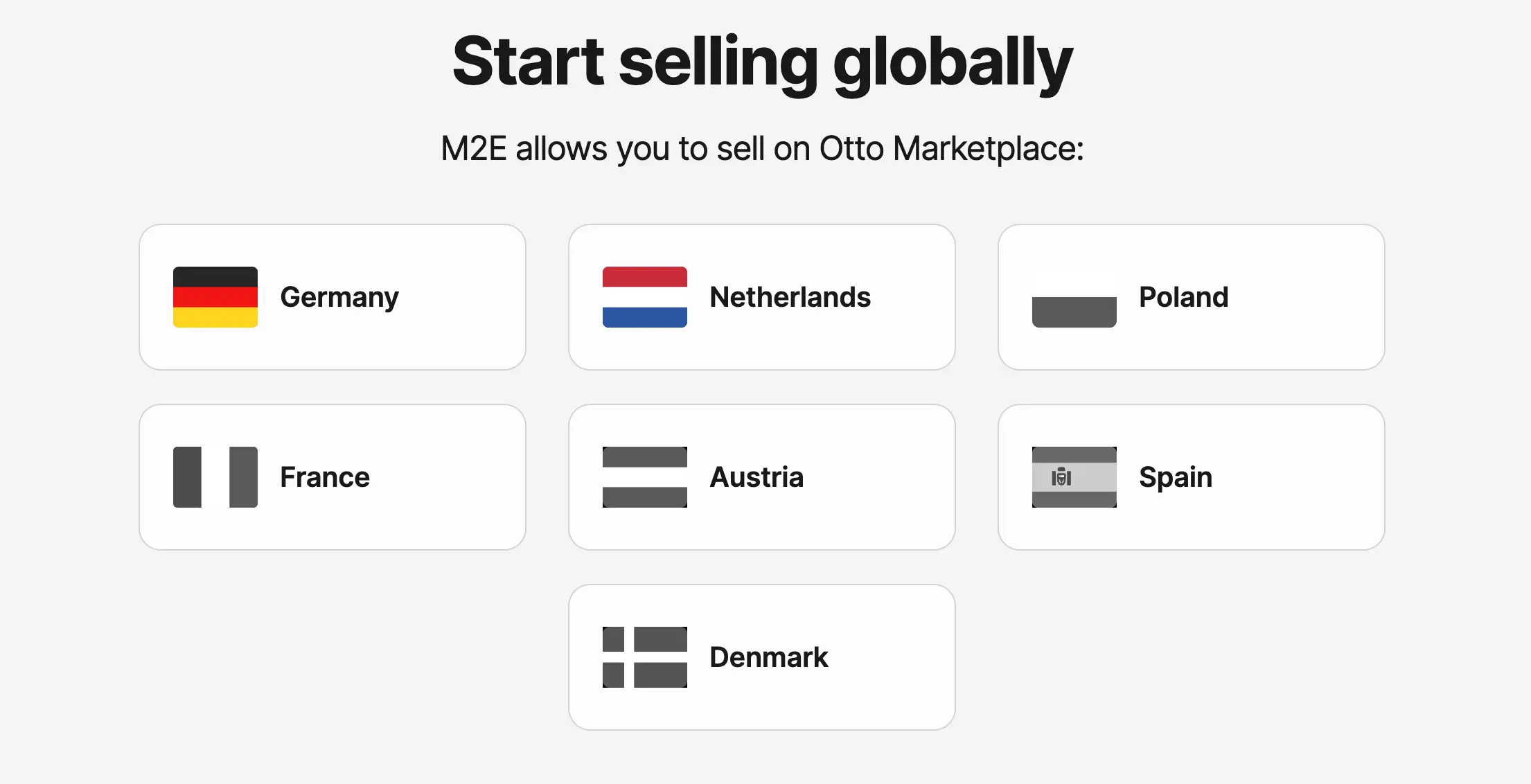
M2E simplifies daily marketplace management. It gives sellers real-time automations and more time to improve their catalog, pricing, and customer experience.
Planning to sell on OTTO Market? Learn how M2E helps you connect your store with OTTO and manage marketplace operations from one place.