The online jewellery market is booming. Fashion-forward buyers are browsing Amazon daily, hunting for unique, trendy, or budget-friendly pieces.
If you’re wondering where to sell handmade, imitation, or fashion jewellery, Amazon might be the best platform to sell jewelry online, but only if you’re set up the right way.
Let’s break it down.
Why Sell Jewellery Online in 2025?
Jewellery is no longer just a boutique business. According to GlobeNewswire, the global jewellery market is going to surpass $266 billion by 2027.
Amazon, as a top eCommerce destination, offers a massive, engaged audience already searching for jewellery on Amazon.
Whether you’re selling fashion accessories, handmade necklaces, or high-end rings, Amazon helps you reach millions.
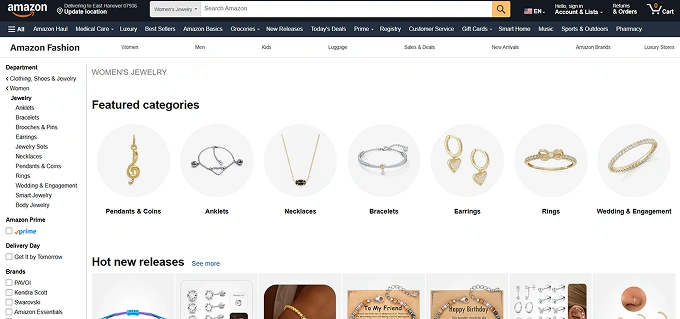
Choose What to Sell
The first step in building your jewellery business online is knowing what kind of products you want to offer, and who they’re for.
Amazon gives you endless possibilities. But to stand out, you need to niche down.
Are you planning to sell:
- Handmade jewellery made with beads, wire, or stones?
- Artificial jewellery that’s affordable, trendy, and perfect for daily wear?
- Imitation jewellery with a high-end look for weddings, parties, or cultural events?
- Custom rings with initials or birthstones?
- Minimalist necklaces perfect for gifting?
Each category attracts a different buyer. Selling fashion jewellery on Amazon is all about identifying what’s in demand and matching your products to the right trend.
Use Amazon’s Best Sellers and Movers & Shakers lists as your research tools. Check what’s climbing the ranks. Pay attention to titles, pricing, and reviews.
Example: “Gold-plated layered necklaces” are hot sellers in fashion categories. Thousands of units sell monthly, often at $15–$30 price points, making them perfect for impulse buys.
Whether you want to sell rings online, launch a collection of statement earrings, or test imitation jewellery bundles, Amazon gives you the data to make wise choices.
Don’t list everything. Focus on what fits your brand and what people are already searching for. That’s how you build a scalable jewellery business online.

Prepare to List Jewellery on Amazon
Before your jewellery can shine on Amazon, your catalogue needs more than just good photos – it has to meet what buyers want and what Amazon requires. That means clear, accurate info that follows the rules and helps your products get found.
Optimise First, Sell Faster: Jewellery Listing Essentials
Want to know how to sell rings online? Start with detailed product data, include exact sizing, metal type, and clear close-up photos to build trust and reduce returns.
At the very least, each jewellery listing on Amazon should cover the basics:
- Material – Is it alloy, sterling silver, stainless steel, or gold-plated? If you’re selling fine jewellery, make sure gold or silver items have the legally required stamps.
- Gem type – Cubic zirconia, crystals, pearls, or natural gemstones. If you’re listing diamonds or precious stones, Amazon may ask for certificates.
- Size or dimensions – Be specific with measurements – especially for rings, necklaces, or custom-made pieces.
- Colour options – List every variation clearly (like silver, rose gold, multicolour).
- Closure type – Mention whether it’s a lobster clasp, hook, stretchable, etc. – important for bracelets and necklaces.
- Style – Is it minimalist, boho, vintage, gothic, or modern?
- Occasion – Think daily wear, weddings, gifts, or cultural events.
These details don’t just help shoppers decide – they help Amazon’s search engine place your product in the right category.
Polish Your Listings with Precision and Policy
Every product detail in your Amazon jewellery catalog must comply with Amazon’s standards and external regulatory requirements, including:
- The National Gold and Silver Stamping Act;
- FTC Jewellery Guides;
- Kimberley Process (for diamonds).
For example, gold and silver items must carry official hallmark stamping. Without this, Amazon may restrict or remove your listing.
International standards like the Kimberley Process also apply to certain gemstones, especially diamonds.
If you’re selling fashion jewellery, the process is much simpler – no prior approval needed. But you still must be accurate in your descriptions and honest about the materials used. Misleading information can lead to your listings being taken down.
Before publishing your catalogue, double-check:
- The accuracy of product descriptions to avoid misleading claims;
- Image compliance: high-resolution, white background for main images, no filters;
- Country of origin: Some items are subject to import restrictions.
Remember: building a compliant product catalogue isn’t just about filling in searchable attributes; it’s about aligning with Amazon’s product policies to avoid listing blocks or suspensions.
If you’re looking to sell necklaces online, make sure to highlight length, clasp type, and styling suggestions. Shoppers often buy based on how a piece fits into their daily look.

Using M2E Pro, you can review and prepare your product data in advance, ensuring everything is correctly formatted and compliant before going live. This helps you list confidently and scale faster.
M2E Pro makes sure your catalogue meets Amazon’s listing rules by checking all the key details, from attributes to formats, before you publish. That means fewer errors, full compliance, and a fully synced Magento store without the hassle of manual updates.
Do you have a store on Shopify, BigCommerce, Ecwid, or WooCommerce? No worries, try Amazon integration from M2E Cloud.

Build Your Storefront
With pricing in place, it’s time to focus on presentation. Your storefront isn’t just a shop; it’s your brand’s first impression. And when you’re selling jewellery on Amazon, that impression needs to sparkle.
Here’s how to make your storefront stand out:
- Use high-quality images – Showcase your rings, necklaces, and handmade jewellery from multiple angles, close-ups highlight texture, shine, and detail. For an even better impression, include at least one photo of how the piece looks when worn.
- Write clear, benefit-first titles – Highlight key selling points like “Hypoallergenic,” “Gold Plated,” or “Handcrafted in the UK.” Make it scannable and specific.
- Add A+ Content – If you’re enrolled in Brand Registry, use banners, comparison charts, and lifestyle images to elevate your product pages.
You’re not just trying to sell rings online, you’re building a jewellery business online. That means giving buyers a reason to trust you, click “Add to Cart,” and come back for more.
How Much Does It Cost to Sell Jewelry on Amazon?
Selling jewellery on Amazon comes with a referral fee, but it’s simple once you break it down.
Here’s how it works:
- 20% referral fee on the first $250 of the total sales price (per item);
- 5% on any amount over $250;
- Minimum fee per unit: $0.30.
Example:
If you sell a necklace online for $100, Amazon takes $20 (20%).
If you sell a ring for $300, Amazon charges:
- $250 × 20% = $50;
- $50 × 5% = $2.50;
- Total fee: $52.50.
You’ll also want to factor in any FBA or shipping costs if you use those services. But the good news? No hidden listing fees. You pay when you make a sale.
That’s the cost of tapping into one of the best platforms to sell jewelry online, and reaching millions of ready-to-buy customers.
Sourcing or Crafting Your Stock
The way you source your jewellery plays a big role in how easily you can meet Amazon’s requirements. Before you buy or make anything, ensure you can provide the necessary information and documents that Amazon expects.
You’ve got a few options:
- Buy from wholesalers – Ensure your supplier provides invoices and proof of authenticity. For branded items, Amazon may require an authorization letter.
- Make under your own brand – You must follow stamping laws, gem certification rules, and provide accurate descriptions, especially for fine jewellery.
- Sell handmade pieces – For unique, artisan items, Amazon Handmade is your best bet. It’s designed for creators and doesn’t require fine jewellery documentation.
No matter which path you take, start building your catalogue early. Gather all the key info Amazon will ask for – like materials, gem types, country of origin, hallmark stamps, and packaging details. The more accurate and organized your product data is from the start, the smoother your listing process will be – and the fewer delays you’ll face.
Smart Fulfilment Options
Once your catalogue is prepared and your products are sourced, the next step is deciding how you’ll deliver them to customers.
Here are your main fulfilment options:
- Store at home – Ideal for handmade jewellery or small inventories. If you’re just starting your jewellery business online, this keeps costs low.
- Use Fulfillment by Amazon (FBA) – Amazon stores, packs, and ships your products. FBA helps you win the Prime badge, boosts buyer trust, and speeds up delivery.
- Work with a dropshipper or warehouse – This is useful if you sell a larger volume or don’t want to handle inventory directly.
For a smoother workflow, consider using the M2E Pro extension for Amazon FBA. You can list FBA products directly from your Magento store, track shipments, and sync updates automatically.
Smart fulfillment isn’t just about speed. It’s about freeing up time so you can focus on sourcing, marketing, and growing your brand.
Price It Right
Your fulfillment choice also shapes your pricing strategy. When selling fashion jewellery on Amazon, pricing can make or break your success. This is a competitive, price-sensitive category, so every dollar counts.
Before setting your prices, consider:
- Materials & packaging – Plated metals and glass stones cost less than sterling silver or natural gems. Fancy packaging adds value but also adds cost.
- Brand perception – Are you positioning yourself as budget-friendly or boutique-level? Your pricing needs to match that message.
- Shipping costs – Lightweight jewellery keeps costs low, but packaging and tracking still matter.
- Fulfillment fees – FBA adds convenience and trust but includes storage and handling fees. Factor these in before finalizing your price.
Want to stay competitive without constant manual updates?
Use Amazon Repricer or let tools like M2E Pro do the work for you.
M2E Pro’s dynamic repricing engine tracks your competitors and automatically adjusts your prices in real time.
Whether you’re trying to win the Buy Box for imitation jewellery or maintain margin on custom rings and necklaces, this feature helps you stay in control and stay profitable.
Promote Your Jewellery Business Online
Once your storefront is ready, it’s time to bring in the traffic.
Don’t just wait for shoppers to find you – get proactive and start promoting.
Use Amazon Ads (Sponsored Products, Brands, or Display) to promote your jewellery to the top of search results and boost visibility from the start.
Show off your pieces on social media.
Jewellery shines in lifestyle settings, and platforms like Instagram and Pinterest are perfect for that. Want to go viral? Try TikTok. Post organic content or run TikTok Ads that link directly to your Amazon storefront.
Team up with micro-influencers to expand your reach:
- Through the Amazon Influencer Program, where creators add your jewellery to their storefronts.
- On TikTok and Instagram, you can work with fashion or lifestyle influencers who can feature your products and share Amazon links.
- On platforms like AspireIQ, Upfluence, or Collabstr, you can filter creators by niche, style, and budget.
If you’re enrolled in Brand Registry, take advantage of Amazon’s Customer Engagement Tool to send email campaigns to followers. You can also encourage buyers to follow your brand page for future updates and promos.
Pro tip: Focus on emotion. People often buy jewellery as a gift or a personal treat, so storytelling and lifestyle imagery work better than plain product shots. The more consistently you promote, the quicker you’ll build awareness and drive repeat sales.
Final Thoughts
Success in selling jewellery on Amazon doesn’t start at the “List” button – it begins with preparation. A well-built catalogue with complete attributes, accurate data, and full compliance makes everything easier: listing, pricing, fulfilment, and even promotion.
Amazon provides a massive reach, but actual growth comes from adopting a multichannel approach. Jewellery sells just as well on platforms like TikTok Shop, Temu, Shein, eBay, and your own website. With M2E Pro (for Magento) or M2E Cloud (for Shopify, BigCommerce, WooCommerce, and more), you can manage all your listings in one place – synced, compliant, and ready to scale.
Get prepared, list with confidence, and grow across every channel that matters.